
Blog
Black Masterbatch: Common Defects in Packaging Production
-
Fish Eyes and Poor Dispersion
This is the most frequently reported issue in black film production. Under light, the film shows small dots, gels or uneven color streaks.
Root Cause
Poor dispersion typically occurs when:
- Carbon black agglomerates are not properly broken during masterbatch production
- Carrier resin is incompatible with base resin (LDPE, LLDPE, HDPE, PP)
- Carbon black loading is too high without sufficient dispersing agents
- Melt Flow Index (MFI) mismatch between masterbatch and base resin
These agglomerates do not melt fully in the extruder, resulting in visible defects in the film.
Solution
- Choose high-dispersion black masterbatch
- Ensure MFI compatibility with base resin
- Use film-grade masterbatch for thin gauge production
- Avoid overloading masterbatch beyond recommended dosage
A well-dispersed black masterbatch ensures uniform color, smooth surface and stable extrusion.
-
Rough Surface and Low Gloss
Instead of a deep, glossy black surface, the film appears dull, grainy or orange-peel textured.
Root Cause
This typically results from:
- Large carbon black particle size
- Excess filler content inside black masterbatch
- Poor melt flow during extrusion
- Low-quality carrier resin
High friction inside the die disrupts surface formation, leading to rough texture.
Solution
- Use premium black masterbatch with fine particle dispersion
- Select high carbon content grades to reduce dosage
- Match MFI to improve flow behavior
- Avoid low-cost filler-heavy black masterbatch
Using 2-3% high-quality masterbatch often delivers better results than 8–10% low-grade material.
-
Pinholes and Bubbles in Film
Pinholes and micro-bubbles reduce barrier properties and mechanical strength, making packaging unsuitable for industrial use.
Root Cause
Moisture is the most common cause. Carbon black can absorb humidity during storage or transport. When processed, moisture vaporizes and forms bubbles.
Other causes include:
- Wet recycled resin
- Poor packaging of masterbatch
- High humidity environments
- Inadequate drying procedures
Solution
- Use low-moisture black masterbatch (<0.1%)
- Store materials in dry conditions
- Use desiccant masterbatch if needed
- Avoid long exposure to humid environments
Moisture control is critical for stable bubble formation and defect-free film.
-
Reduced Mechanical Strength
After adding black masterbatch, some manufacturers notice film becoming brittle or easier to tear.
Root Cause
This usually happens when:
- Excessive masterbatch loading is used
- Black masterbatch contains high CaCO3 filler content
- Low-quality recycled carrier resin is used
- Poor dispersion weakens polymer bonding
These factors reduce:
- Tensile strength
- Elongation at break
- Dart impact resistance
Solution
- Use high pigment concentration masterbatch
- Reduce let-down ratio (LDR)
- Select low-filler black masterbatch
- Ensure compatibility with base resin
Lower dosage with high-quality masterbatch helps maintain mechanical integrity.
-
Filter Clogging and Pressure Increase
Sudden pressure increase and frequent screen changes reduce production efficiency.
Root Cause
Filter clogging occurs due to:
- Carbon black agglomerates
- Impurities in low-grade masterbatch
- Poor filtration during masterbatch production
- Wide particle size distribution
These particles accumulate in filter screens and restrict flow.
Solution
- Choose masterbatch with low Filter Pressure Value (FPV)
- Use multi-stage filtered black masterbatch
- Select high dispersion grades for thin film
- Avoid low-cost unfiltered material
Low FPV ensures:
- Stable extrusion pressure
- Longer screen life
- Reduced downtime
Key Factors When Selecting Black Masterbatch
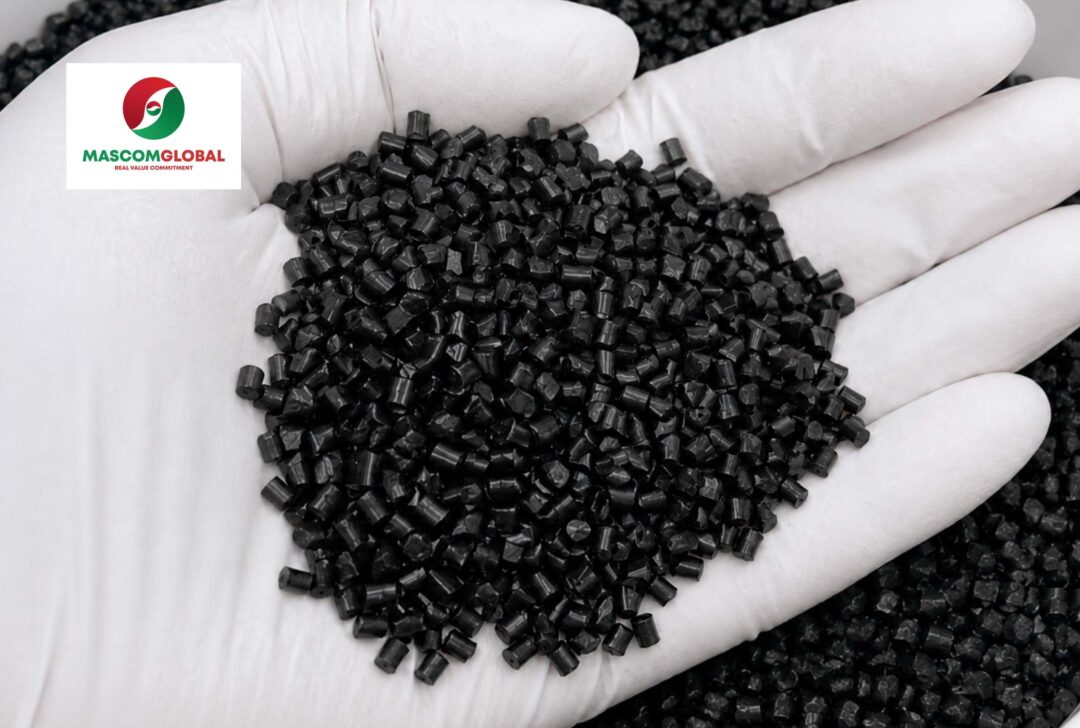
(Illustrative purpose only)
For packaging production, a high-performance black masterbatch should provide:
- Excellent dispersion
- Compatible carrier resin
- Matched Melt Flow Index
- Low moisture content
- Low FPV value
- High carbon black purity
- Minimal filler content
These parameters directly affect film quality, productivity and cost efficiency.
Why Dispersion Matters More Than Carbon Content?
Many buyers focus only on carbon black percentage. However, dispersion quality is more important than pigment loading.
A 40% carbon black masterbatch with superior dispersion often performs better than a 50% poorly dispersed grade. Better dispersion results in:
- Smoother film surface
- Higher gloss
- Better mechanical strength
- Lower defect rate
- Stable extrusion
This is the key to consistent packaging production.
Final Thoughts
Black masterbatch plays a critical role in packaging quality. What seems like a simple color choice can directly impact:
- Film appearance
- Mechanical strength
- Production stability
- Scrap rate
- Operating cost
Selecting the right black masterbatch is not just about color, it’s about process performance and product reliability.
If you are experiencing dispersion issues, fish eyes, rough surface or filter clogging, optimizing your black masterbatch formulation can significantly improve your production efficiency.
