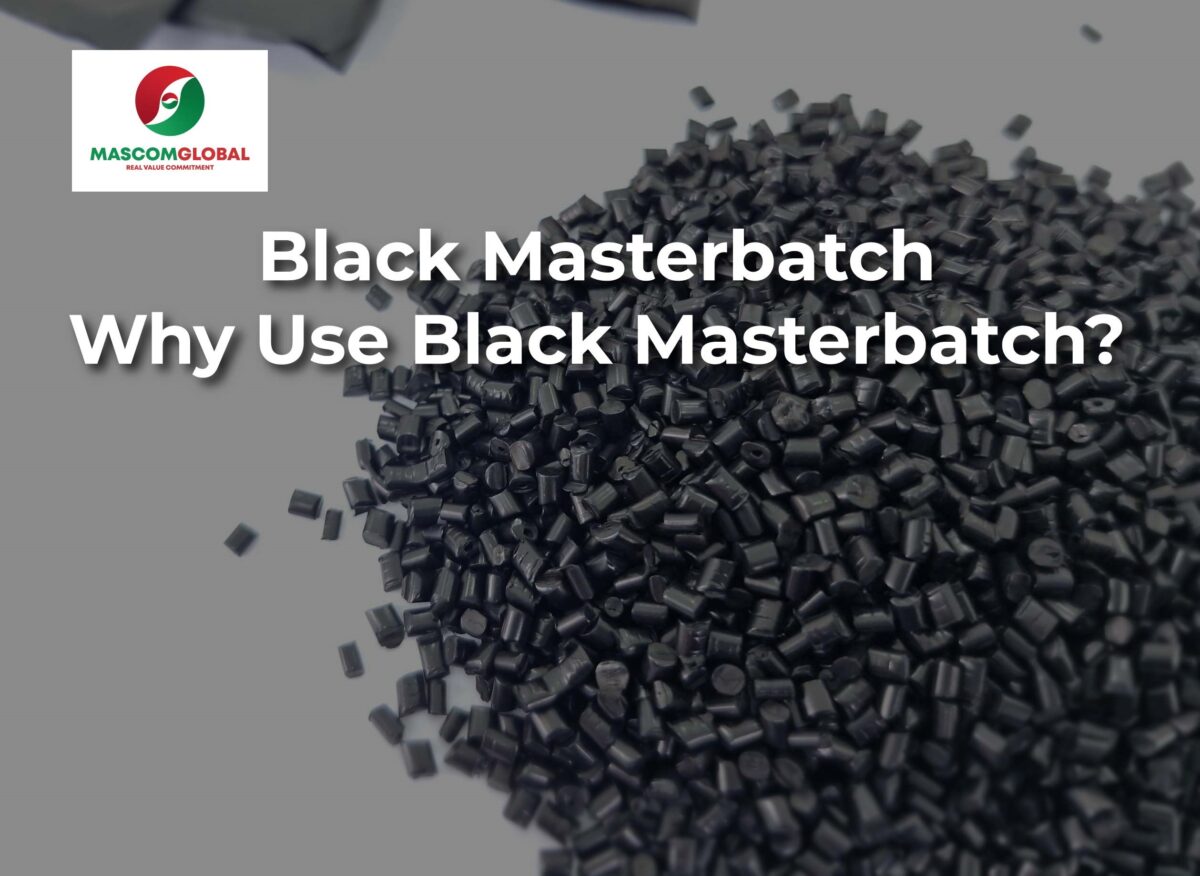
In the plastics industry, a masterbatch is a concentrated mixture of pigments (or dyes) and/or additives embedded in a carrier resin or wax. This mixture is pre-compounded so that when added to virgin plastic resin during processing, it easily disperses color or desired properties throughout the final plastic product.
A black masterbatch specifically uses a black pigment — typically carbon black — as the coloring agent. The black pigment is combined with a carrier polymer and other additives to create a concentrated black “colorant package.”
Black masterbatch is widely used because it delivers a deep, rich black color even when added in small proportions. Beyond color, it often enhances mechanical and physical properties of the plastic such as UV resistance, heat stability, and durability, making it suitable for a broad range of plastic products.
In short, black masterbatch is a convenient, cost-effective, and high-performance way to impart black color (and additional properties) to plastic materials in manufacturing.
Why Use Black Masterbatch?

Using black masterbatch rather than adding raw pigment directly brings several advantages:
- Strong color intensity and opacity: Because the pigment is already well-dispersed in a carrier resin, black masterbatch provides consistent, deep black coloration, even at low dosing.
- Improved dispersion and uniformity: Masterbatch ensures even distribution of carbon black pigment throughout the plastic, minimizing issues like streaks, spots, or uneven coloration.
- Enhanced material properties: Black masterbatch often contributes to better mechanical strength, impact resistance, heat resistance, UV resistance, and overall stability of final plastic products.
- Simplified production: Rather than handling loose pigment powder (which may be messy, inconsistent, or hazardous), using masterbatch simplifies feeding, measuring, and mixing — improving efficiency and quality control.
Because of this, black masterbatch is commonly used in applications like injection molding, extrusion, pipe manufacturing, consumer goods, packaging, fibers, and more.
Black Masterbatch at Mascom Global
Mascom Global (Vietnam) is one of the producers that offers black masterbatch — specifically “Black PP Masterbatch” — tailored for polypropylene-based products.
According to Mascom Global, their black masterbatch delivers:
- Deep, rich black color with excellent opacity (jetness).
- Outstanding pigment dispersion — avoiding streaks or color spots.
- Enhanced mechanical strength, impact resistance, scratch resistance, and heat resistance compared with non-colored resin.
- Excellent thermal stability, making it ideal for processes such as injection molding, film blowing, fiber extrusion, or pipe extrusion.
- Strong resistance to UV degradation if UV stabilizers are included, making it suitable for outdoor applications.
Because of these properties, Black PP Masterbatch from Mascom Global is widely used in manufacturing items like plastic pipes, trays, pallets, household goods, technical plastic products, injection-molded parts, and more.
How Mascom Global Produces Black Masterbatch — Step by Step

The production of black masterbatch at Mascom Global typically follows a standardized, carefully controlled process to guarantee consistency, quality, and stability across batches.
1. Selecting high-quality raw materials
The foundation begins with selecting a high-grade black pigment — usually carbon black — chosen for: deep black intensity (jetness), thermal stability, high purity, and minimal impurities (which could degrade polymer performance).
Alongside the pigment, a suitable carrier resin (e.g. polypropylene for Black PP Masterbatch) is chosen, along with any necessary additives (e.g. dispersing agents, UV stabilizers, processing aids).
2. Premixing of raw materials
Carbon black pigment powder, carrier resin, and additives are blended in precise ratios using industrial high-speed mixing equipment. This premixing ensures a homogeneous mixture before melt extrusion.
The high-speed mixer helps in pre-breaking pigment agglomerates and allows low-melting-point wax (if used as dispersant) to pre-wet the pigment, facilitating better adhesion to resin particles.
3. Melt extrusion and dispersion
The premixed materials are fed into a twin-screw extruder. Inside the extruder: the resin melts; carbon black is dispersed uniformly in the polymer matrix; high-shear mixing and controlled pressure ensure thorough blending; and air (or other volatile impurities) may be removed via vacuum degassing.
This extrusion step is critical for ensuring fine and uniform pigment dispersion and consistent masterbatch quality.
4. Cooling and pelletizing
After extrusion, the molten polymer strand is cooled (often in a water bath) and then cut into uniform pellets (granules) through a pelletizing system. These pellets constitute the final black masterbatch product.
Mascom Global places high demands on pellet quality: smooth, glossy surface, no air bubbles, uniform pellet size, low moisture content, and no clumping or contamination.
5. Quality control (QC)
Each batch of masterbatch undergoes rigorous testing before packaging. Tests include verifying blackness (jetness) and opacity, pigment dispersion quality, melt flow index (MFI), UV resistance (if required), moisture and impurity levels, etc. Only batches that meet Mascom Global’s strict standards are approved for packaging and distribution.
6. Packaging and storage
Finally, the approved black masterbatch pellets are packed (typically in moisture-proof bags, e.g. 25 kg per bag) and stored in clean, dry warehouse conditions, meeting international export and quality standards.
Conclusion
Black masterbatch is a highly efficient, standardized way to color plastic materials black, while often improving the performance, durability, and stability of the final products. As a pre-compounded, concentrated mixture of carbon black pigment, compatible resin, and additives, it simplifies production and ensures reliable, uniform coloration.
At Mascom Global, the production of Black PP Masterbatch follows an internationally recognized process — from careful raw-material selection, premixing, high-shear twin-screw extrusion, pelletizing, to strict quality control — to deliver a high-quality, stable masterbatch that meets diverse application needs.