
1️⃣ What is a Cast Film Extruder?
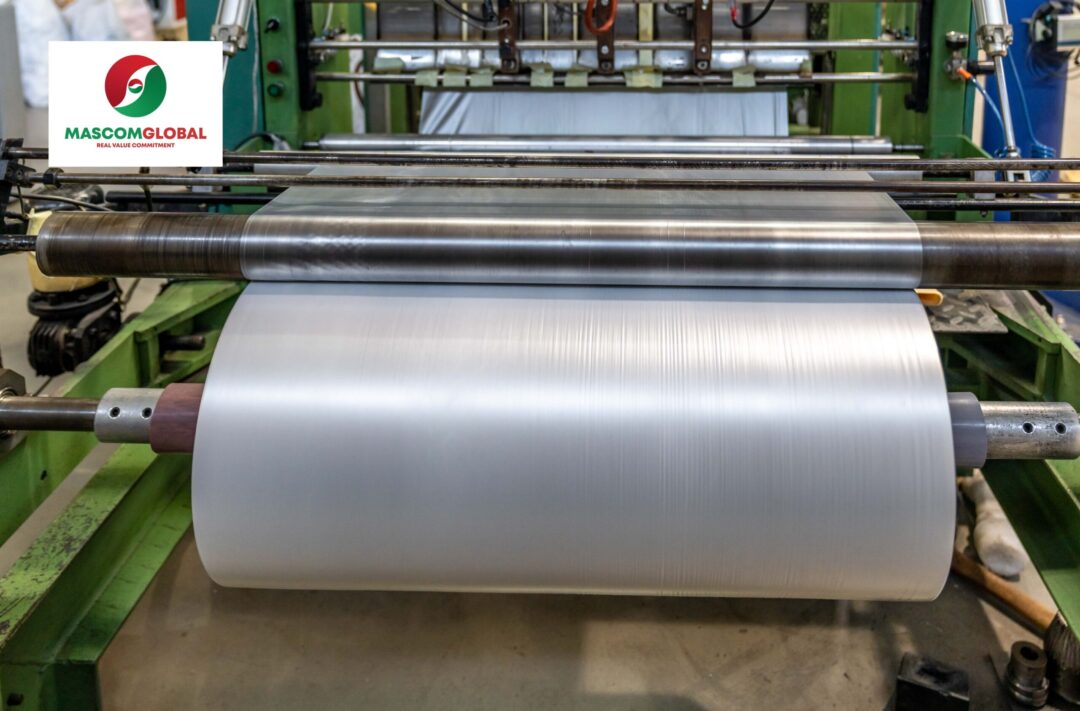 A Cast Film Extruder is a plastic film extrusion machine that operates by melting resin and pushing it through a flat slot die, then cooling it immediately on a chill roll. Compared to blown-film extrusion, this technology is distinguished by:
- The film is shaped on a flat surface instead of being blown into a tubular form.
- Excellent thickness consistency and mirror-smooth film surface.
- Capable of producing thin, medium, or thick films depending on requirements.
- Stable and uniform film thickness.
- High throughput and fast production speed.
- Easy integration with surface treatments, multilayer coating, and additive enhancement.
2️⃣ What is PVC Compound and its role in cast film extrusion
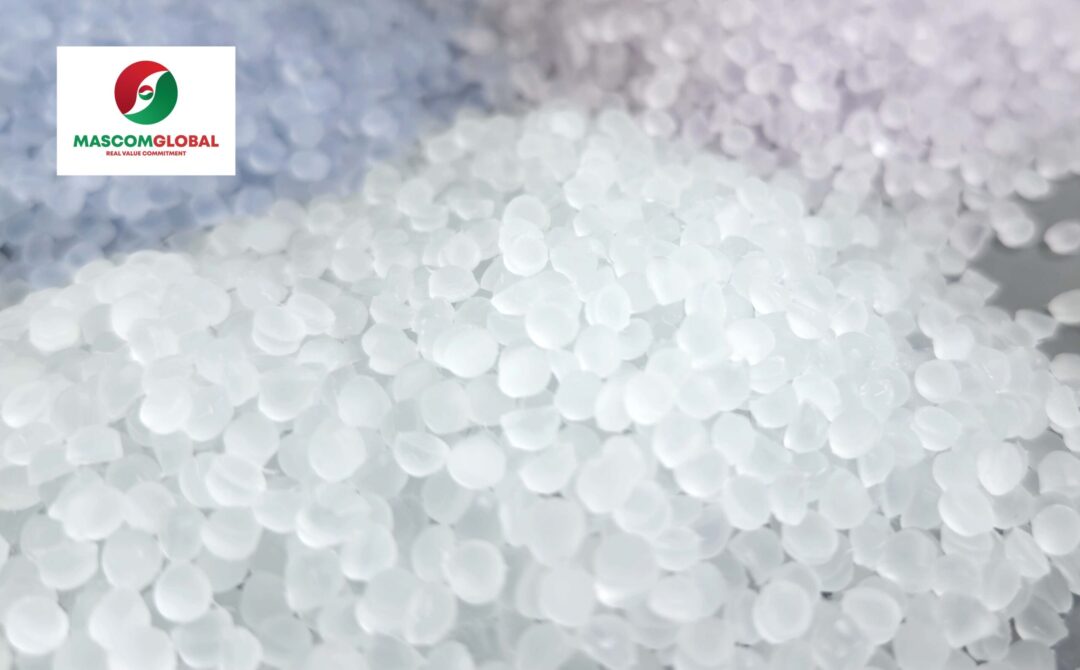 PVC Compound is a formulation consisting of virgin PVC resin blended with plasticizers, stabilizers, fillers, lubricants, and other additives. The formulation is engineered to optimize flexibility, heat resistance, impact strength, and color stability during processing.
In a cast film extrusion system, PVC Compound is considered the key material:
PVC Compound is a formulation consisting of virgin PVC resin blended with plasticizers, stabilizers, fillers, lubricants, and other additives. The formulation is engineered to optimize flexibility, heat resistance, impact strength, and color stability during processing.
In a cast film extrusion system, PVC Compound is considered the key material:
- Provides elasticity and required mechanical strength.
- Stabilizes extrusion, reduces shrinkage and deformation.
- Enhances filler dispersion, ensuring uniform texture and glossy finish.
- Adjustable to achieve desired surface properties such as anti-stick, printability, anti-static, or UV-resistant performance.
3️⃣ Benefits of using PVC Compound in cast film extrusion
High-quality PVC Compound enables manufacturers to achieve:- Superior film quality: smooth surface, even gauge, free from fish-eyes, voids, or gel.
- Improved operational stability: stable melting behavior, fewer shutdowns caused by clogging.
- Material cost optimization: compatible with filler and masterbatch to lower cost without sacrificing performance.
- Product diversification: easy coloration, UV-layer integration, anti-static modification — ideal for food packaging, agriculture, and construction film applications.
4️⃣ How to use PVC Compound in Cast Film Extruders
To optimize performance, several key processing points must be considered:✔ Select the appropriate PVC Compound
- Choose compounds with suitable flexibility and processing temperature.
- Evaluate filler loading, stabilizer level, and mechanical requirement compatibility.
✔ Pre-drying the compound
- Reduces moisture to prevent bubbles and pinholes in film.
✔ Control temperature & screw speed
- Excessive temperature may cause degradation or discoloration.
- Too low temperature can result in unstable melting and thickness deviation.
- Proper screw speed ensures desired film thickness and consistent output.
✔ Correct application of chill rolls
- Uniform cooling ensures flatness and reduces shrinkage.
- Roll temperature must remain consistent across width to avoid warping or curving.
✔ Routine quality inspection
- Test tensile strength, gloss, thickness uniformity.
- Adjust the PVC formulation or machine settings when required to maintain long-term stability.
5️⃣ Common Applications of Cast Film Using PVC Compound
- Agricultural film: UV-tolerant, weather-resistant, retains soil moisture.
- Food packaging film: safe, flexible, transparent, high clarity.
- Technical / construction film: heat-resistant, strong, moisture-proof.
- Industrial wrapping film: PE/PVC-blend for goods protection during transport and storage.