
1. Overview of Plastic Materials
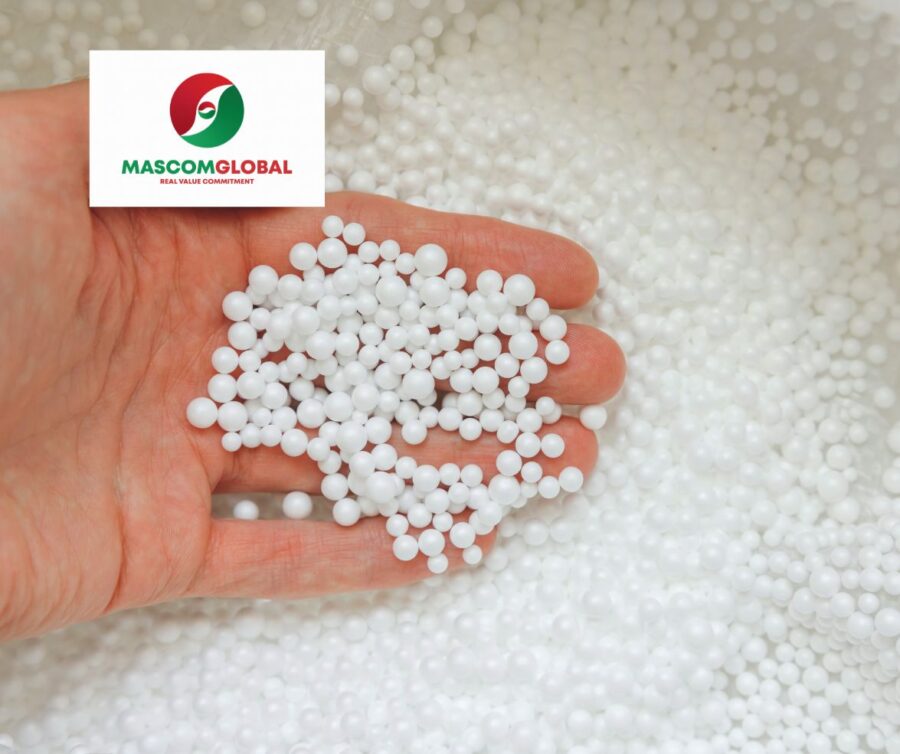
Plastic is one of the most versatile materials used across modern industries, thanks to its lightweight, durability, flexibility, and ease of processing. Based on chemical properties, plastics are generally classified into two main categories:- Thermoplastics (e.g., PP, PE, PVC, PS): can be melted and reshaped multiple times.
- Thermosets (e.g., PU, Epoxy): can only be molded once and retain their structure permanently.
 2. Common Types of Plastics and Their Applications
2.1. Polyethylene (PE)
Characteristics: PE is the most widely used plastic in the industry and is available in two primary forms:- LDPE (Low-Density Polyethylene): soft, flexible, and stretchable.
- HDPE (High-Density Polyethylene): strong, rigid, and chemical-resistant.
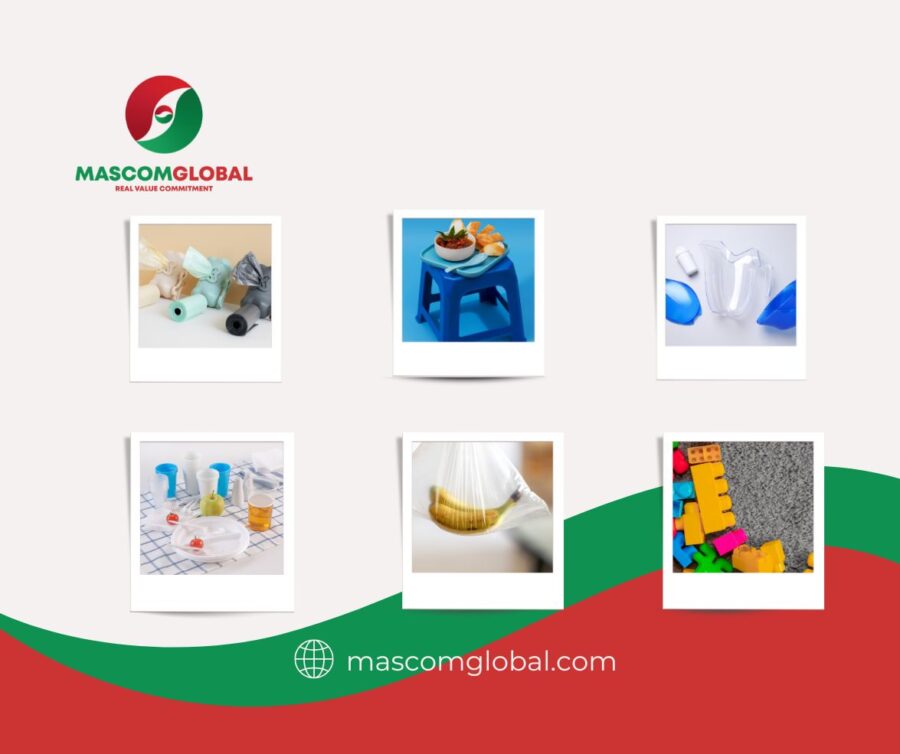
- LDPE: film packaging, plastic bags, stretch wrap, drip irrigation tubing.
- HDPE: bottles, containers, water pipes, household goods, and toys.
2.2. Polypropylene (PP)
Characteristics: PP is lightweight, heat-resistant, durable, and easy to color. Applications: Woven sacks, PP fibers, plastic containers, BOPP films, and injection-molded products. Comment: PP is the most popular base polymer for filler masterbatch production. Adding filler enhances rigidity, improves heat resistance, and optimizes material costs — especially important in woven packaging, piping, and injection molding applications.2.3. Polyvinyl Chloride (PVC)
Characteristics: PVC offers good electrical insulation and flame resistance. When combined with plasticizers, it becomes flexible (soft PVC). Applications: Pipes, cables, roofing sheets, films, and building materials. Comment: Using filler masterbatch in PVC helps improve impact strength, lower production costs, and maintain surface smoothness.2.4. Polystyrene (PS)
Characteristics: PS is transparent, rigid, but brittle. Two main types include:- GPPS (General Purpose PS): clear and brittle.
- HIPS (High Impact PS): more flexible due to rubber content.
 3. Key Technical Parameters for Choosing Base Resin in Filler Masterbatch
Selecting the right polymer base is vital to achieve optimal dispersion, stability, and quality in filler masterbatch production. Here are the most critical technical parameters to consider:
3. Key Technical Parameters for Choosing Base Resin in Filler Masterbatch
Selecting the right polymer base is vital to achieve optimal dispersion, stability, and quality in filler masterbatch production. Here are the most critical technical parameters to consider:
3.1. Melt Flow Index (MFI / MI)
Definition: Measures how easily the plastic flows under specific temperature and pressure. Meaning: A higher MFI → better flowability → improved CaCO₃ dispersion. Each application requires a specific MFI range for optimal processing.3.2. Crystallinity
Affects the product’s stiffness, transparency, and shrinkage. Polymers with higher crystallinity (like PP and HDPE) produce stronger, more dimensionally stable filler compounds.3.3. Compatibility
Indicates how well the polymer blends with CaCO₃ particles. Using coupling agents (e.g., stearic acid) improves compatibility and ensures even filler distribution.3.4. Moisture Content & Hygroscopicity
Polymers with high moisture absorption (e.g., PE, PP, PA, PET) must be dried before processing to prevent voids, burn marks, or poor surface finish.3.5. Density (Specific Gravity)
Directly affects blending ratios and product weight. Lightweight base resins (like PP and PE) help reduce raw material costs when mixed with filler.3.6. Melting Point
Determines the optimal processing temperature in extruders and mixers. The base polymer’s melting point should align with CaCO₃ and additive stability to avoid material degradation. 4. Importance of Selecting the Right Base Resin A high-quality filler masterbatch depends not only on the purity of CaCO₃ but also on choosing the right base resin. Balancing MFI, crystallinity, and compatibility helps:- Reduce energy consumption during production.
- Enhance filler dispersion and consistency.
- Maintain gloss, strength, and aesthetic appeal of the final product.