
Polypropylene Raffia (PP Raffia) is widely used in the production of woven PP bags, rice bags, fertilizer bags, animal feed packaging, cement bags, and various industrial packaging products. Thanks to its good tensile strength, lightweight properties, and processing flexibility, PP Raffia has become a popular material in the woven packaging industry.
To produce high-quality PP Raffia yarn with consistent performance, manufacturers need to select suitable raw materials and carefully control the blending ratio. So, what raw materials are required to produce PP Raffia, and what role does each component play in the manufacturing process?
1. What Is Polypropylene Raffia?
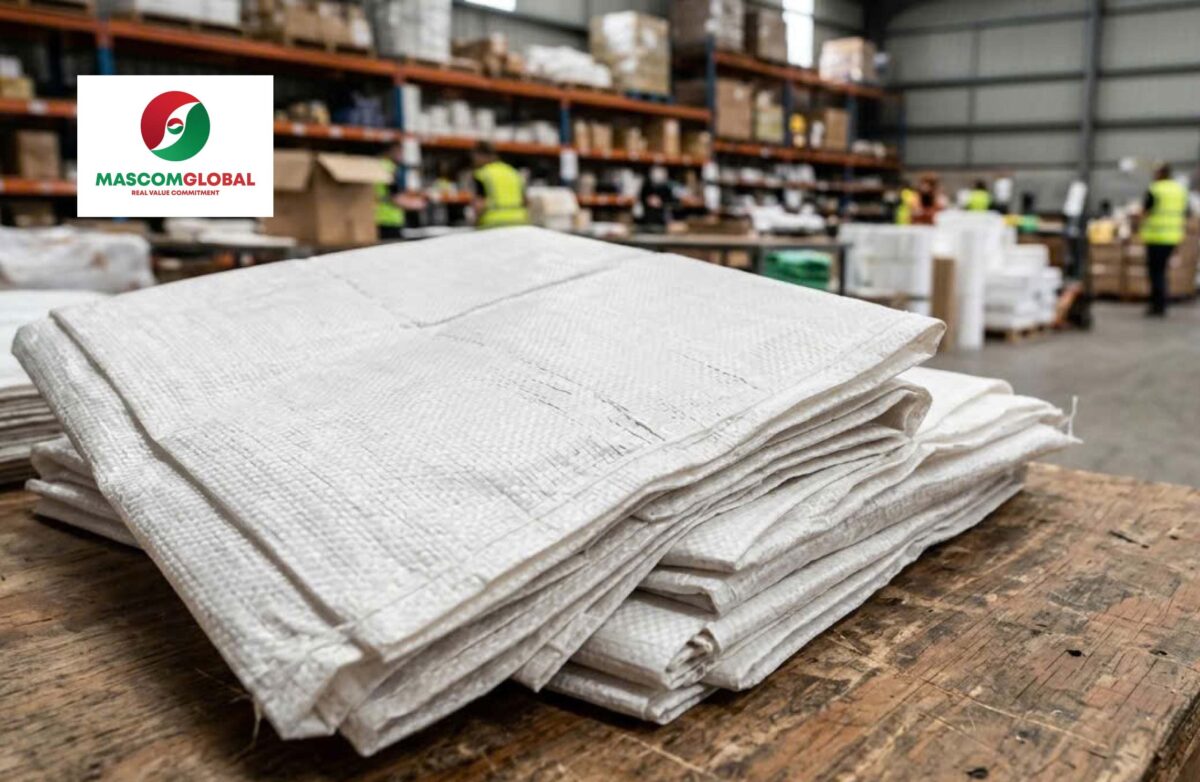
(Illustrative purpose only)
PP Raffia is a flat plastic tape or yarn made from polypropylene (PP) resin through extrusion, film stretching, and slitting processes. The resulting tapes are woven into PP fabric, which is then converted into bags and other industrial products.
The quality of Polypropylene Raffia depends on several factors, including the quality of the base resin, the additive system, the filler content, and processing parameters such as extrusion temperature, stretching ratio, and production speed.
2. Main Raw Materials for Polypropylene Raffia Production
2.1. Polypropylene Resin (PP Resin)
PP Resin is the primary raw material in polypropylene raffia production and plays a critical role in determining the mechanical properties of the finished yarn.
PP homopolymer grades with suitable processing and stretching characteristics are commonly used in woven bag applications. The selected resin should provide appropriate melt flow behavior, tensile strength, and stretchability.
Key functions of PP Resin:
- Provides the polymer matrix for the raffia yarn.
- Contributes to tensile strength and load-bearing performance.
- Supports extrusion, stretching, and weaving processes.
- Influences yarn consistency and production efficiency.
Selecting the right PP grade depends on the product design, production line speed, yarn fineness, and mechanical requirements of the finished bag.
2.2. Filler Masterbatch - Calcium Carbonate (CaCO₃) Masterbatch
Filler Masterbatch is a plastic compound containing calcium carbonate (CaCO₃) dispersed in a polymer carrier. It is used in some polypropylene raffia formulations to reduce raw material costs and modify certain material properties.
Benefits of using Filler Masterbatch:
- Helps reduce raw material costs.
- Supports adjustments to stiffness and processing characteristics.
- May improve dimensional stability under suitable processing conditions.
- Helps manufacturers optimize formulation costs when the loading level is properly controlled.
However, the CaCO₃ content and addition rate must be carefully selected. Excessive filler loading or poor dispersion may reduce tensile strength, affect stretchability, and increase yarn breakage during production.
For woven PP bags that require high tensile strength, manufacturers should evaluate Filler Masterbatch at different loading levels and test tensile strength, elongation at break, and yarn performance under actual production conditions.
2.3. Color Masterbatch
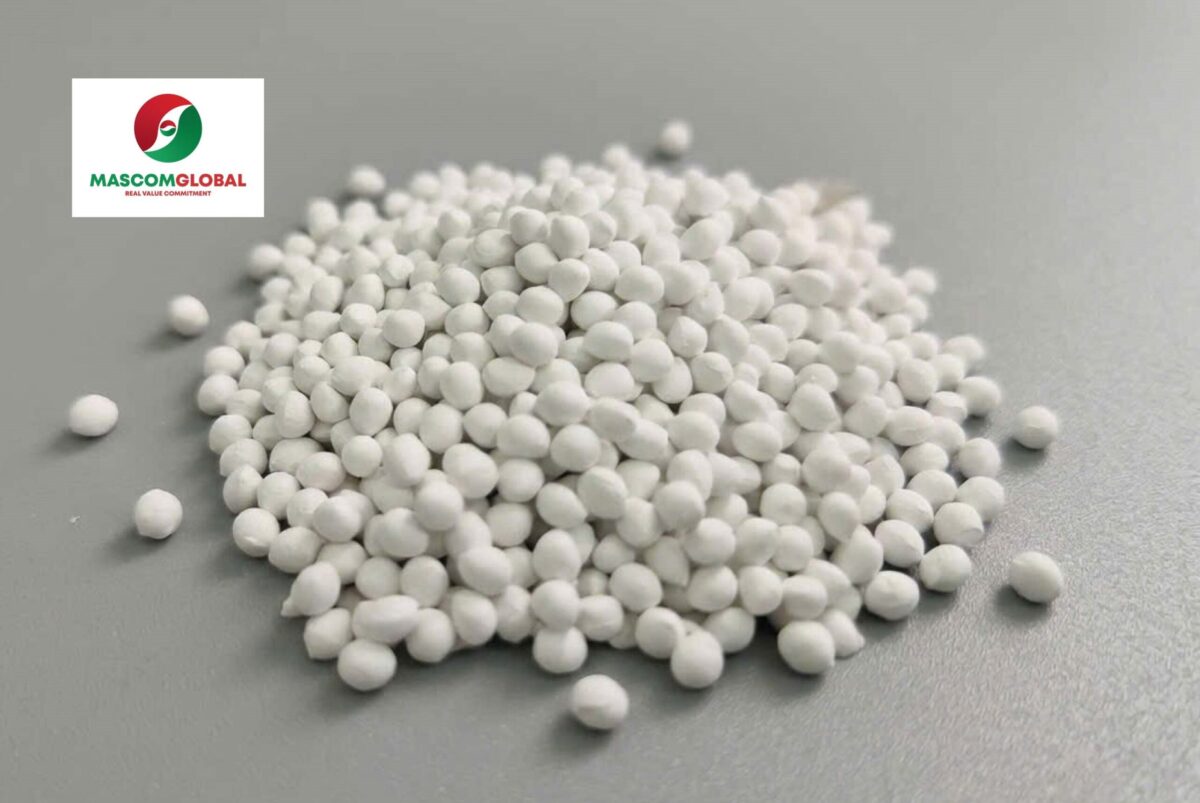
Color Masterbatch is used to produce colored polypropylene raffia yarn or woven fabric. It contains pigments dispersed in a polymer carrier, helping manufacturers achieve consistent coloration during processing.
Key functions of Color Masterbatch:
- Provides colors according to customer requirements.
- Improves color uniformity across raffia tapes.
- Supports consistent appearance in woven fabric and finished bags.
- Reduces the need to weigh and mix pigment powders directly at the production site.
When selecting Color Masterbatch, manufacturers should consider compatibility with PP resin, pigment dispersion, thermal stability, and the color requirements of the final product.
2.4. Additive Masterbatch
Depending on the intended application and technical requirements, manufacturers may incorporate suitable Additive Masterbatch into their polypropylene raffia formulations.
Common types include:
- UV Masterbatch: Helps protect products against ultraviolet radiation, particularly woven bags used outdoors.
- Antioxidant Masterbatch: Helps limit thermal oxidation under suitable processing and application conditions.
- Antistatic Masterbatch: Helps reduce static charge accumulation when the formulation and operating conditions are appropriate.
- Slip Masterbatch: Can help modify surface friction in certain specialized applications.
Not every polypropylene raffia product requires all these additives. Selection should be based on end-use requirements, processing conditions, and the supplier's technical recommendations.
2.5. Recycled Polypropylene (Recycled PP)
Some manufacturers incorporate recycled PP to reduce raw material costs. However, its suitability depends on the quality of the recycled material and the performance requirements of the finished bags.
Important factors to control include contamination, moisture, melt flow properties, degradation of mechanical performance, and consistency between material batches.
For woven bags requiring high load-bearing capacity, recycled PP should be carefully evaluated, and the blending ratio should be validated before mass production. Material selection should not be based on price alone.
3. Recommended Material Blending for Polypropylene Raffia
There is no single formulation suitable for every polypropylene raffia application. The appropriate blending ratio depends on bag load requirements, tape thickness, machine speed, mechanical properties, and cost targets.
| Raw Material | Main Function | Key Considerations |
| PP Resin | Base polymer and primary source of yarn strength | Select a grade suitable for tape extrusion and stretching |
| Filler Masterbatch | Cost optimization and modification of material properties | Control filler loading and dispersion |
| Color Masterbatch | Provides color to raffia tapes and woven fabric | Ensure color consistency and PP compatibility |
| Additive Masterbatch | Provides specific functional properties | Select according to actual application requirements |
| Recycled PP | May partially replace virgin resin | Control material quality and consistency |
When developing a formulation, manufacturers should begin with the technical requirements of the finished bag and optimize each component through production trials.
Increasing Filler Masterbatch or recycled PP content should be evaluated alongside tensile strength, elongation, yarn stretchability, and yarn breakage rates.
4. Factors Affecting Polypropylene Raffia Quality
To maintain stable production and consistent product quality, manufacturers should pay attention to the following factors.
- Base resin quality: PP Resin should have suitable melt flow properties and stretchability for the production line.
- Additive dispersion: Filler Masterbatch and Color Masterbatch should disperse effectively to minimize stress concentration points and visual defects.
- Blending ratio: Filler, color, and additive levels should be controlled to balance material costs with mechanical performance.
- Processing parameters: Extrusion temperature, stretching ratio, production speed, and cooling conditions directly affect raffia tape quality.
- Finished product testing: Tensile strength, elongation at break, tape uniformity, and weaving performance should be evaluated to ensure the formulation meets the required specifications.
5. Filler Masterbatch Solutions for PP Raffia from MASCOM GLOBAL
For woven PP bag manufacturers, selecting the right Filler Masterbatch can help optimize raw material costs while maintaining the required mechanical properties and production efficiency.
MASCOM Global provides masterbatch solutions for the plastics industry, including Filler Masterbatch, Color Masterbatch, and additives for different plastic processing applications.
When selecting Filler Masterbatch for PP Raffia, manufacturers should consider:
- CaCO₃ content and carrier resin properties.
- Filler dispersion in the PP matrix.
- Tensile strength and elongation of the stretched tapes.
- Yarn breakage rates and weaving stability.
- Overall cost efficiency per ton of finished product.
MASCOM Global can discuss application requirements, current filler loading, and technical specifications with customers to identify suitable products for production trials. The final formulation should be validated through machine trials and actual quality testing.
6. Conclusion
Producing high-quality PP Raffia requires the right selection of PP Resin and an appropriate combination of Filler Masterbatch, Color Masterbatch, Additive Masterbatch, or recycled PP, depending on the application.
Filler Masterbatch can help optimize raw material costs, but its loading level and dispersion must be carefully controlled to avoid negatively affecting tensile strength and tape stretching performance.
If you are looking for masterbatch solutions for woven PP bags, contact MASCOM GLOBAL to discuss your application requirements, technical specifications, and suitable product trials.