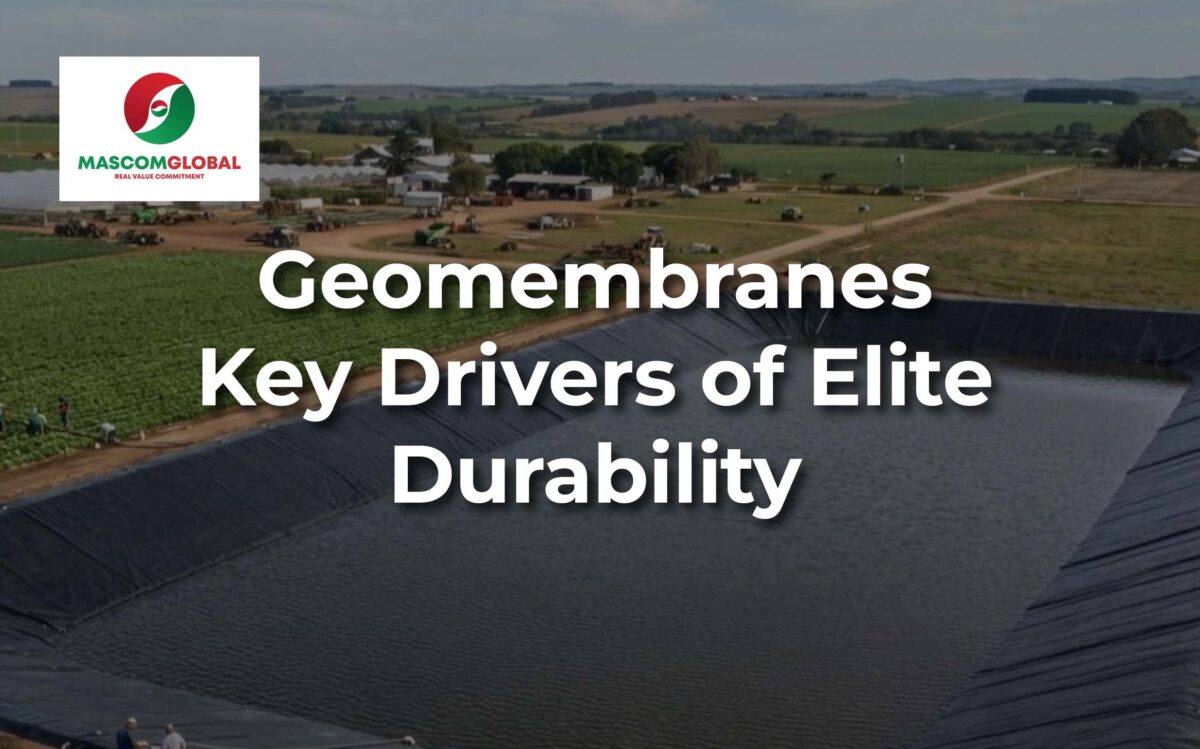
Geomembranes serve as the critical containment barrier in modern infrastructure, environmental protection, mining, and civil engineering projects. From lining municipal landfills and industrial waste ponds to securing agricultural reservoirs and heap leach pads, these synthetic liners must perform flawlessly under harsh conditions. A failure in a geomembrane system can lead to severe environmental contamination, catastrophic project delays, and massive financial liability.
Engineers, project owners, and polymer compounders know that not all geomembranes are created equal. The physical integrity, chemical resistance, and operational lifespan of a liner are dictated by specific formulation parameters during the extrusion process.
To ensure long-term containment security, here are the vital factors that directly influence the quality and field performance of high-performance geomembranes.
1. Base Polymer Selection and Resin Purity
The foundation of any high-quality geomembrane is its base resin - typically High-Density Polyethylene (HDPE), Linear Low-Density Polyethylene (LLDPE), or Polyvinyl Chloride (PVC). The molecular weight distribution and density of the virgin resin govern the material's fundamental mechanical strength, environmental stress crack resistance (ESCR), and puncture endurance.
Resin purity is equally paramount. Contaminants, unreacted monomer residues, or inconsistent resin lots introduce structural weak points that accelerate degradation under operational stress. Top-tier geomembrane manufacturers partner with reliable raw material producers to ensure batch-to-batch consistency before any compounding takes place.
2. Carbon Black and Color Masterbatch Dispersion
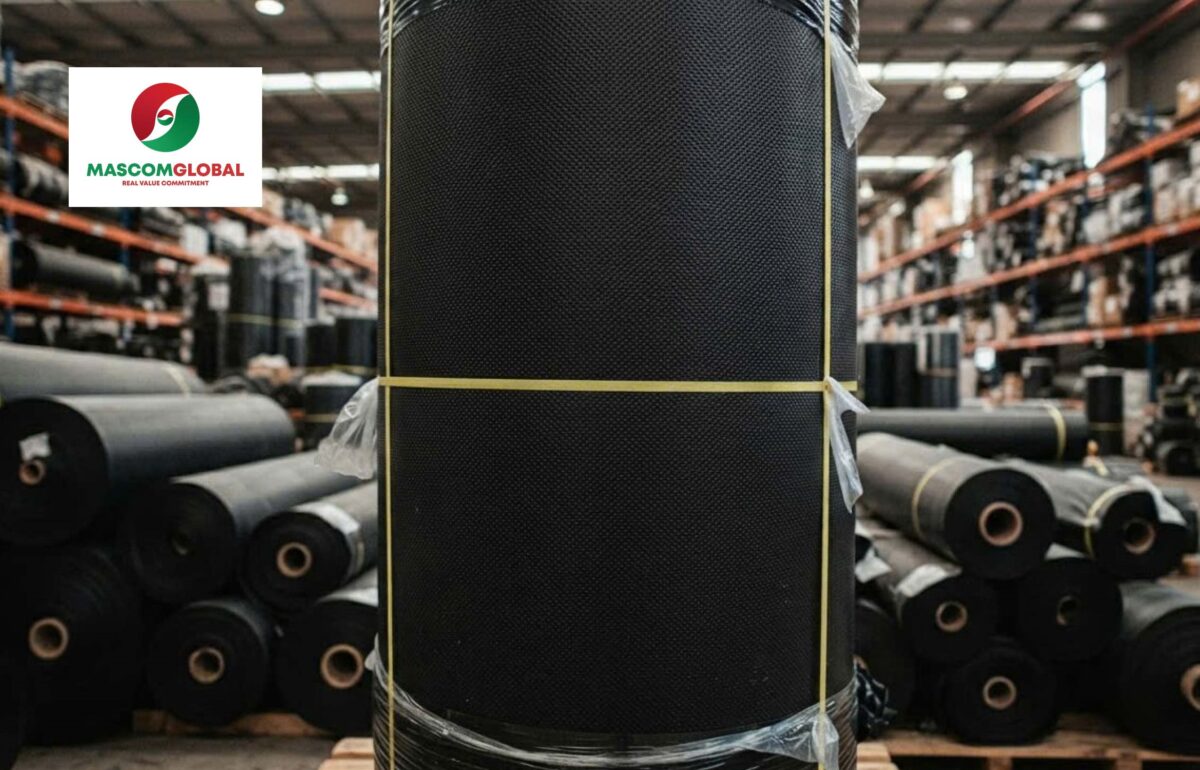
(Illustrative purpose only)
Most civil and mining geomembranes are exposed to intense solar radiation throughout their service life. Ultraviolet (UV) light triggers photo-oxidative degradation, breaking polymer chains and causing embrittlement. To combat this, manufacturers incorporate specialized Carbon Black or Color Masterbatch into the extrusion blend.
However, simply adding pigment is not enough; pigment dispersion is what determines true protection. If carbon black particles agglomerate instead of dispersing evenly, they create localized stress concentrators that weaken the liner.
This is where Mascom Global plays a strategic role. By supplying high-dispersion Color Masterbatch and specialty black masterbatch formulations, Mascom Global enables geomembrane extruders to achieve homogeneous pigment distribution. This uniform dispersion forms a continuous UV shield across the liner, preventing surface micro-cracking and preserving elongation properties over decades of outdoor exposure.
3. Strategic Additive Packages for Thermal and Chemical Shielding
While the base resin provides structural shape, the additive package acts as the active protective barrier. Without advanced antioxidant and stabilizer systems, geomembranes quickly degrade under high thermal processing temperatures and prolonged chemical exposure.
The quality of geomembranes rely heavily on three core additive functions:
- Antioxidants (Primary and Secondary): These sacrificial compounds capture free radicals and neutralize hydroperoxides formed during thermal processing and long-term service, protecting the polymer matrix from thermal degradation.
- Hindered Amine Light Stabilizers (HALS): HALS provide continuous radical-scavenging protection against sunlight, regenerating themselves during the stabilization cycle to extend outdoor lifespan.
- Processing Aids: Specialized fluoropolymer processing aids prevent melt fracture during extrusion, resulting in a smooth, defect-free surface.
By incorporating high-performance Additives from Mascom Global, geomembrane manufacturers enhance their liners' oxidative induction time (OIT), ensuring maximum resistance to aggressive leachate chemicals, acids, and elevated temperatures.
4. Controlled Filler Masterbatch Integration for Optimized Mechanical Balances
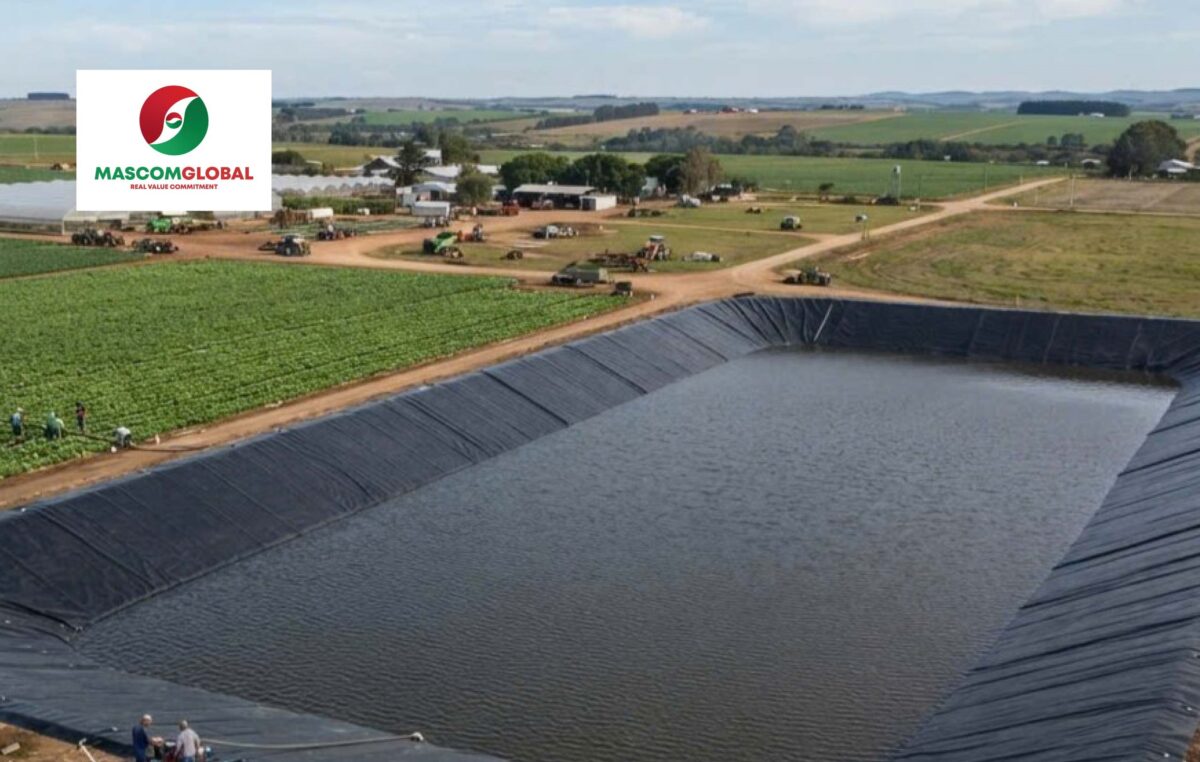
(Illustrative purpose only)
In specialty geomembrane applications - such as textured liners or specific civil engineering sheets - manufacturers must balance structural rigidity, tear resistance, and overall cost efficiency.
Integrating an engineered Filler Masterbatch allows producers to fine-tune the mechanical profile of the liner. High-purity Calcium Carbonate (CaCO3) or specialty mineral fillers improve dimensional stability, enhance thermal conductivity during cooling, and optimize heat transfer during field welding.
Through Mascom Global’s customized Filler Masterbatch solutions, extruders achieve optimal dispersion within Polyethylene or PVC matrices. This controlled formulation approach ensures that the geomembrane maintains high tensile strength and puncture resistance while optimizing production output and cost-efficiency.
5. Extrusion Processing Consistency and Quality Control
Even the most advanced polymer formulation can fail if the manufacturing process is inconsistent. Geomembranes are produced via blown film or flat die sheet extrusion. Maintaining precise thermal profiles, uniform melt flow, and consistent thickness across wide sheets is critical.
Thickness variation creates localized weak zones prone to premature puncture or seam failure during field welding. Reliable producers implement continuous online thickness monitoring and rigorous post-production testing - such as tensile testing, tear resistance, and wide-width strip elongation - to guarantee international standards compliance.
Conclusion
The quality of geomembranes is a direct reflection of its underlying chemistry. From base resin purity and precise additive synergy to perfect masterbatch dispersion, every element contributes to the liner’s ability to protect the environment and secure vital infrastructure.
At Mascom Global, we empower global geomembrane manufacturers with advanced Color Masterbatches, high-performance Polymer Additives, and specialized Filler Masterbatches. Our tailormade formulations ensure high melt stability, flawless dispersion, and long-term environmental endurance.